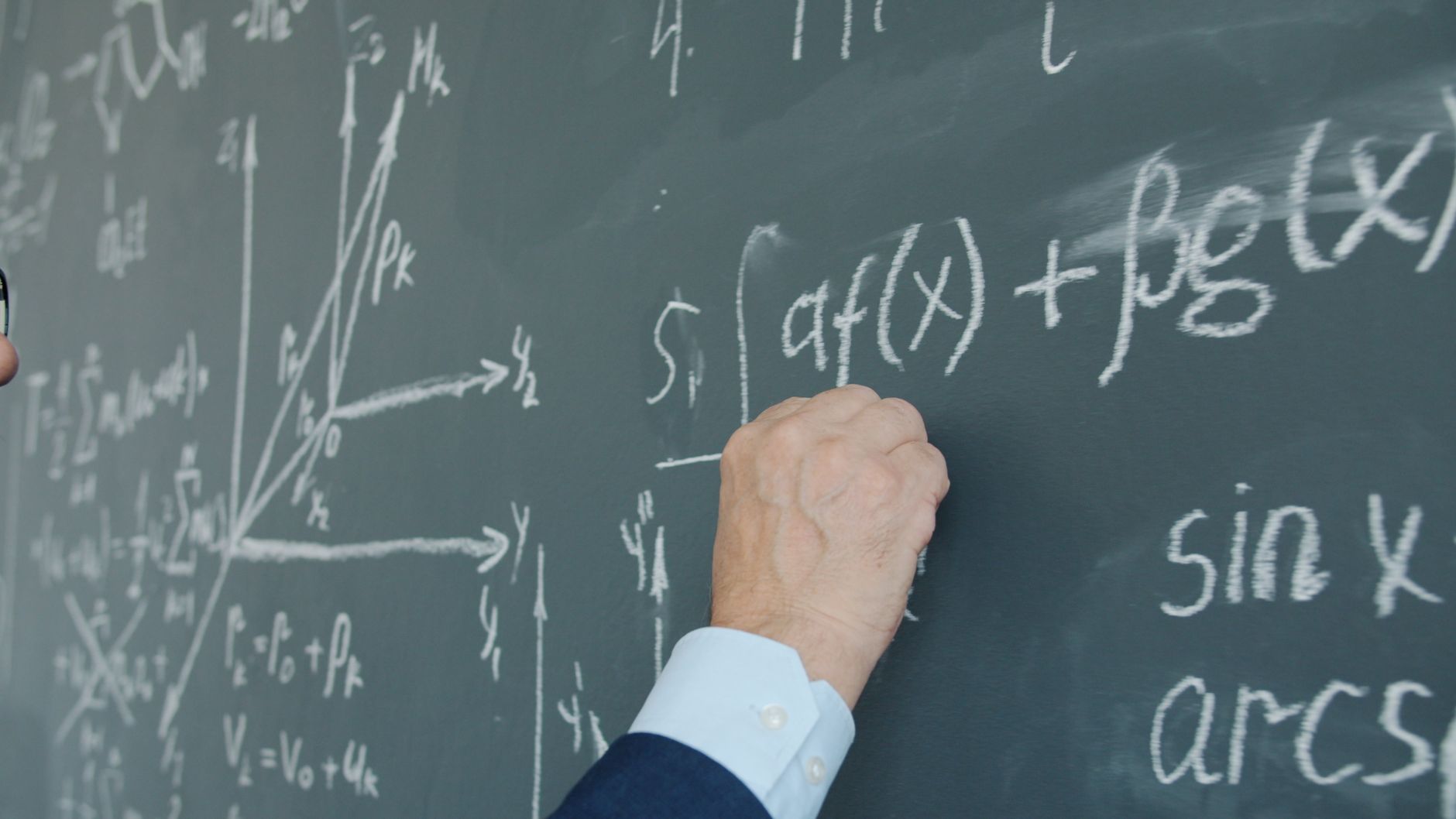
AI model solves maths problems with impressive efficiency, managing to tackle over 100 challenges in less than a month of training.
Introduction to OpenAI’s New Model
OpenAI has recently developed an AI model that has demonstrated remarkable capabilities in solving complex maths problems. Within less than a month of training, this advanced model has successfully tackled over 100 various mathematical challenges, showcasing its potential to assist students and professionals alike.
The AI model is designed to understand and interpret complex equations, providing accurate solutions with impressive speed. By leveraging vast amounts of data and sophisticated algorithms, it not only offers answers but also explains the reasoning behind each solution. This approach aims to enhance the learning experience for users, making it easier to grasp intricate mathematical concepts.
As educational tools evolve, the emergence of such models could significantly change the landscape of mathematics education. The implications of this technology are vast, and many are eager to see how it will shape future learning environments.
How the AI Model Works
The innovative AI model developed by OpenAI is designed to tackle various mathematical problems with remarkable efficiency. Utilizing advanced algorithms and extensive datasets, the model learns to recognize patterns and apply logical reasoning to solve equations.
Here’s how the AI model works:
- Data Training: The model is trained on a diverse range of mathematical problems, allowing it to understand different concepts and methodologies.
- Pattern Recognition: By analyzing the data, the AI identifies underlying patterns, which aids in predicting solutions to new problems.
- Iterative Learning: The model continuously improves through iterative learning, refining its accuracy with each problem solved.
- Real-time Problem Solving: Once trained, the AI model can solve maths problems in real-time, demonstrating quick and reliable solutions.
This impressive capability showcases how the AI model solves maths problems efficiently, revolutionizing the approach to mathematical challenges.
Key Features of the AI Model
The newly developed AI model boasts several key features that enhance its ability to solve complex maths problems efficiently.
- Rapid Learning: The model has demonstrated the capability to learn from a vast array of mathematical data in less than a month, significantly reducing the time needed for training.
- High Accuracy: With the ability to solve over 100 different maths problems, the AI model ensures precise and reliable solutions, making it a valuable tool for students and professionals alike.
- User-Friendly Interface: Designed with accessibility in mind, users can easily interact with the AI, allowing for a seamless experience while seeking assistance with maths problems.
- Versatile Problem-Solving: The AI model is equipped to handle various types of maths challenges, from basic arithmetic to advanced calculus, demonstrating its versatility.
Overall, this AI model exemplifies how technology can transform the approach to solving maths problems.
The Training Process Explained
The development of the AI model that solves maths problems involved a meticulous training process designed to enhance its capability and accuracy. Initially, the model was fed a vast dataset comprising various mathematical problems ranging from basic arithmetic to complex equations. This extensive training allowed the AI to recognize patterns and develop problem-solving strategies.
Key components of the training process included:
- Data Collection: Curating a diverse set of maths problems to ensure comprehensive learning.
- Algorithm Optimization: Implementing advanced algorithms to improve the model’s efficiency.
- Feedback Loops: Continuously refining the model based on its performance in solving problems.
As a result, this AI model not only demonstrates remarkable speed in solving maths problems but also achieves high accuracy, showcasing the potential of artificial intelligence in educational applications.
Applications of AI in Mathematics
The emergence of advanced AI models has significantly transformed the landscape of mathematics. One of the most impressive applications of these AI systems is their ability to solve complex maths problems quickly and accurately. The recent developments in AI technology have opened new avenues in various fields, showcasing the versatility of these models.
Some notable applications include:
- Education: AI models can provide personalized tutoring, helping students grasp difficult concepts.
- Research: Researchers leverage AI to solve intricate equations and assist in proofs, accelerating the pace of discovery.
- Finance: In financial modeling, AI can analyze vast datasets to predict market trends and optimize investment strategies.
- Engineering: AI aids in simulations and problem-solving within engineering projects, enhancing design efficiency.
The ability of an AI model to solve maths problems demonstrates its potential to reshape traditional methodologies across various sectors.
Comparing AI Models in Problem Solving
In the rapidly evolving field of artificial intelligence, different models are emerging with varying capabilities in problem-solving. When we compare AI models in problem-solving, several factors come into play that can affect performance and accuracy.
- Speed: Some AI models can provide quick solutions, while others may take longer to process complex problems.
- Accuracy: The precision of results varies significantly, with certain models achieving near-perfect accuracy on maths problems.
- Versatility: An efficient AI model is not only limited to one type of problem but can adapt to various mathematical challenges.
- Training Efficiency: OpenAI’s new model has proven that an AI model can solve maths problems effectively after just a month of training, showcasing the potential for rapid development.
This comparison highlights the importance of selecting the right AI model for specific mathematical applications.
Future of AI in Education
The potential of AI in education is rapidly expanding, especially with the emergence of advanced AI models. These innovations not only enhance traditional learning methods but also provide students with tailored approaches to tackle challenging subjects like mathematics.
As AI models solve maths problems more efficiently, they could revolutionize how students engage with math. The ability to receive instant feedback and personalized guidance creates a more interactive and effective learning environment.
In the near future, we may see:
- Adaptive Learning: AI models could adjust to individual student needs, helping them learn at their own pace.
- Enhanced Tutoring: Virtual assistants powered by AI could provide real-time assistance for homework and test preparation.
- Data-Driven Insights: Educators could utilize analytics from AI interactions to understand student progress better.
Ultimately, the integration of AI into education promises to create a more dynamic and engaging learning experience.
Conclusion: The Impact of AI on Learning
In conclusion, the emergence of AI models that solve maths problems marks a significant shift in the educational landscape. These advanced algorithms have the potential to revolutionize how students approach learning and problem-solving. By providing quick and reliable solutions to complex mathematical challenges, AI fosters a more engaging and efficient learning environment.
Moreover, the ability of these models to adapt to individual learning styles allows for personalized education, catering to diverse student needs. This could lead to enhanced understanding and retention of mathematical concepts, encouraging a more profound interest in the subject.
As AI technology continues to evolve, its integration into educational systems may redefine traditional teaching methods, enabling educators to focus on fostering critical thinking and creativity in students. Ultimately, the impact of AI on learning could be transformative, paving the way for future innovations in education.
The recent advancements in technology have shown that an AI model solves maths problems with remarkable efficiency. Researchers are excited about the potential applications as the AI model solves maths problems across various fields.
Photo by Vitaly Gariev on Pexels
Read the original
New crater on the moon: A once-in-a-lifetime discovery · Anthropic model training: The Wrong Move in Claude Deal · GTA 6 multiplayer release: Is it the best launch ever?