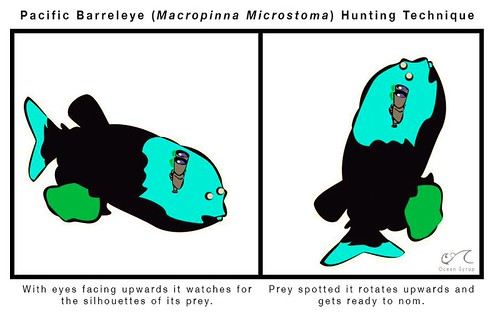
The deep-sea barreleye fish is rarely seen, but recent footage captured in 4K reveals its stunning features. This extraordinary creature has intrigued scientists and ocean enthusiasts alike.
What is the deep-sea barreleye fish?
The deep-sea barreleye fish, known for its unique and translucent head, is a remarkable creature that has captured the fascination of marine biologists and enthusiasts alike. Found at depths of up to 2,500 feet, this fish inhabits the dark, cold waters of the ocean, making it a rare sight for researchers and photographers.
One of the most striking features of the barreleye fish is its large, tubular eyes, which can rotate to focus on prey above and below. These eyes are protected by a transparent dome, allowing for an unobstructed view of its surroundings. This adaptation is crucial for survival in the deep sea, where light is scarce and food sources are limited.
Researchers have recently succeeded in capturing footage of the deep-sea barreleye fish in stunning 4K resolution, revealing not only its unusual anatomy but also its behavior in its natural habitat. The high-definition video showcases the fish in action, providing insights into its feeding habits and interactions with other marine life.
- Habitat: Deep ocean waters
- Depth: Up to 2,500 feet
- Unique features: Translucent head, tubular eyes
As scientists continue to study this extraordinary fish, its mysteries remain a topic of great interest in marine research.
Why is the barreleye fish rarely seen?
The deep-sea barreleye fish is rarely seen due to several factors that make its observation challenging. First and foremost, this unique creature inhabits the depths of the ocean, typically between 200 and 2,000 feet, where light is minimal and the environment is harsh. The darkness of the deep sea makes it difficult for researchers and enthusiasts to spot these elusive fish.
Additionally, the barreleye fish’s transparent head, which allows it to look upward and spot prey, makes it an intriguing subject for study, yet its unusual habitat complicates efforts to observe it in its natural setting. The deep-sea barreleye fish is often found near hydrothermal vents and other deep-sea structures that are not easily accessible.
Furthermore, the technological limitations of deep-sea exploration contribute to the rarity of sightings. While advancements in submersible technology and underwater cameras have improved, the costs and risks associated with deep-sea missions remain high. Only recently have researchers managed to capture high-quality footage of the barreleye fish in its environment, shedding light on its behavior and lifestyle.
As a result, the deep-sea barreleye fish remains one of the ocean’s mysteries, captivating those fortunate enough to catch a glimpse of its remarkable features.
How was the barreleye fish filmed in 4K?
The deep-sea barreleye fish, known for its unique transparent head and striking green eyes, was recently captured on film in stunning 4K resolution. This remarkable achievement was made possible by an innovative approach to underwater exploration and filming technology.
To film the barreleye fish, researchers utilized a specialized remotely operated vehicle (ROV) equipped with advanced cameras capable of high-definition recording. The ROV descended to depths where these elusive creatures reside, allowing scientists to observe their natural behavior in unprecedented detail.
The filming took place in the Pacific Ocean, where the barreleye fish is known to inhabit depths of over 800 meters. Utilizing the ROV’s lights, researchers were able to illuminate the dark waters, revealing the fish’s fascinating features without disturbing its natural habitat.
During the recording, the barreleye fish exhibited its characteristic feeding behavior, which involves capturing prey with its unique mouth structure. This rare footage not only sheds light on the life of the deep-sea barreleye fish but also highlights the importance of technological advancements in marine research.
As the footage circulates in the scientific community and beyond, it has sparked renewed interest in deep-sea biology and the mysteries that lie beneath the ocean’s surface.
The unique features of the barreleye fish
The deep-sea barreleye fish possesses several unique features that set it apart from other marine creatures. One of the most distinctive characteristics is its transparent head, which allows researchers to observe its internal organs and enhances its ability to see in the dark depths of the ocean.
Another remarkable feature is its large, tubular eyes that are capable of rotating within its head. This adaptation enables the barreleye fish to spot potential prey and predators from various angles. Additionally, the eyes can adjust their focus to capture both bioluminescent light and other forms of illumination in the deep sea.
The barreleye fish also has a specialized diet, primarily feeding on jellyfish and other soft-bodied organisms. Its unique mouth structure allows it to consume prey that would be challenging for other fish. This adaptability is crucial for survival in an environment where food sources can be scarce.
Furthermore, the barreleye fish’s bioluminescence plays a significant role in its behavior and habitat. This ability may help it communicate with others of its species or attract prey in the dark ocean depths. Collectively, these features make the deep-sea barreleye fish one of the most fascinating creatures in the ocean.
Impact of technology on marine research
Advancements in technology have significantly transformed marine research, particularly in studying elusive creatures like the deep-sea barreleye fish. Historically, observing these enigmatic fish required extensive underwater exploration and often yielded minimal results. However, modern innovations have paved the way for groundbreaking discoveries.
One of the most impactful developments is the use of remotely operated vehicles (ROVs) equipped with high-definition cameras. These ROVs allow researchers to explore deep-sea environments with minimal human presence, capturing footage that was once deemed impossible. The recent 4K filming of the deep-sea barreleye fish is a prime example of how technology enhances our understanding of marine life.
Additionally, advancements in sonar and imaging technologies have improved our ability to locate and study deep-sea habitats. Researchers can now map the ocean floor and identify potential habitats of rare species more efficiently. This technology has led to increased awareness about the ecological significance of deep-sea environments and the creatures that inhabit them.
Moreover, data collected from these technologies contribute to conservation efforts, helping to protect vulnerable species like the deep-sea barreleye fish. As technology continues to evolve, it holds the potential to unlock even more secrets of the ocean, fostering a deeper appreciation for its diverse inhabitants.
By Ocean Syrup via Openverse