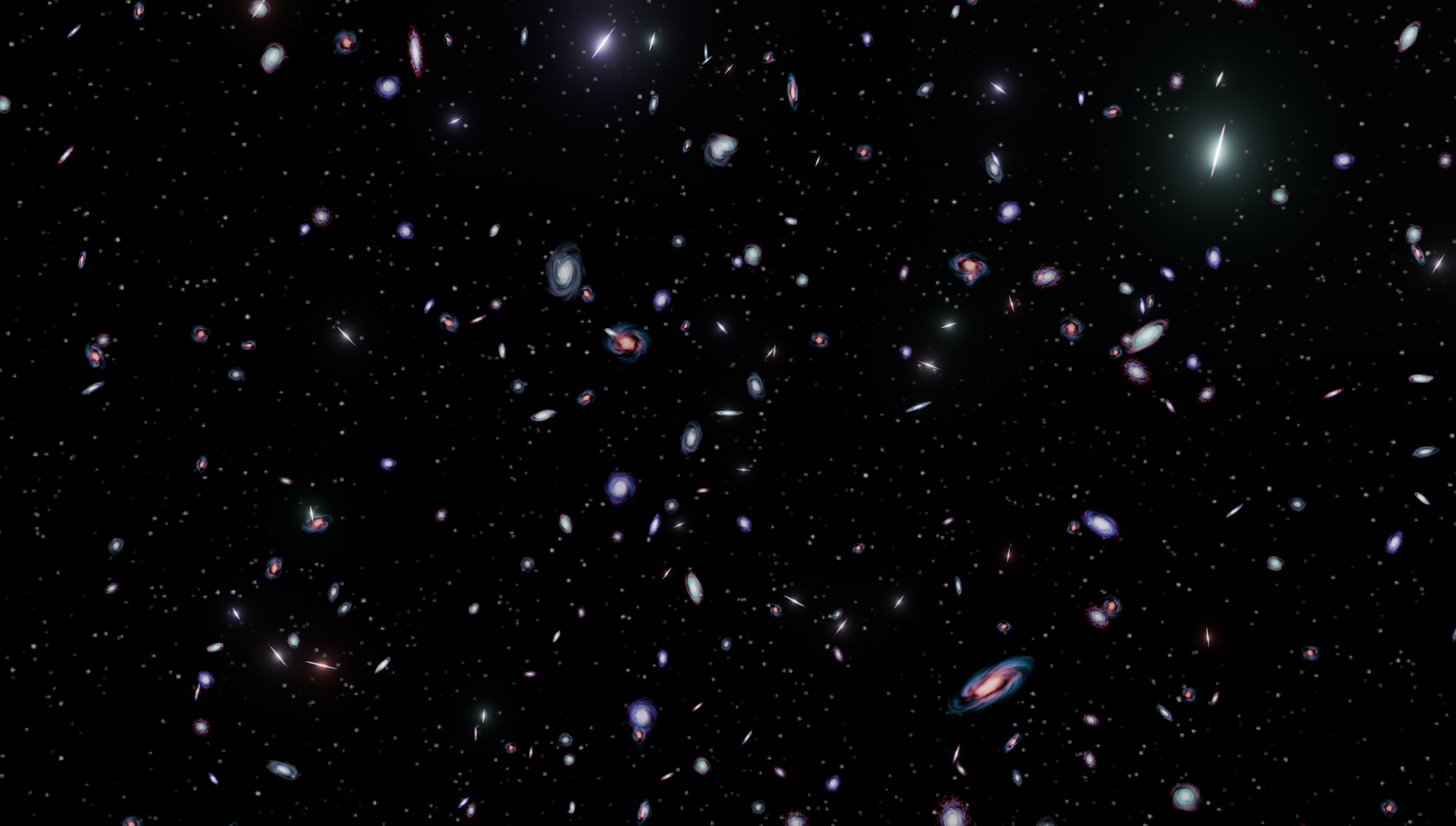
Galaxy cluster in space has been recently captured by the Hubble telescope, showcasing a remarkable formation that resembles a giant smiley face.
What is a galaxy cluster?
A galaxy cluster is a vast grouping of galaxies bound together by gravity. These clusters are among the largest structures in the universe and can contain hundreds to thousands of individual galaxies. They typically form in regions of space where matter is densely concentrated, allowing the gravitational attraction to pull galaxies together over billions of years.
In addition to galaxies, a galaxy cluster also comprises hot gas and dark matter. The hot gas emits X-rays, which can be detected by space telescopes like Hubble. This emission provides valuable insights into the cluster’s mass and the dynamics at play within it.
Galaxy clusters can vary significantly in size and composition. Some of the key characteristics include:
- Number of Galaxies: Clusters can host a few dozen to thousands of galaxies.
- Mass: They can weigh from millions to trillions of solar masses.
- Temperature: The hot gas in clusters can reach temperatures of millions of degrees.
Studying these cosmic giants provides crucial information about the formation and evolution of the universe, making galaxy clusters significant objects of interest in astrophysics.
How Hubble captured the image
The Hubble Space Telescope has been instrumental in capturing stunning images of galaxy clusters in space, showcasing the intricate beauty and complexity of these vast formations. Recently, Hubble unveiled a remarkable image that resembles a giant smiley face, which has captured the fascination of astronomers and enthusiasts alike.
To achieve this incredible feat, Hubble utilized its advanced imaging technology, including the Wide Field Camera 3. With its ability to detect light across various wavelengths, Hubble can reveal details that are often invisible to the naked eye. This capability allowed scientists to observe the gravitational lensing effect, where the massive gravitational pull of a galaxy cluster bends and magnifies light from more distant galaxies.
The resulting image not only highlights the cluster’s unique shape but also provides insights into its composition and the interplay of cosmic forces. Astronomers studied the data to identify numerous smaller galaxies within the cluster, offering a glimpse into the formation and evolution of these celestial structures.
As Hubble continues its mission, it promises to unveil more extraordinary discoveries, enhancing our understanding of galaxy clusters in space and their role in the universe.
The significance of the discovery
The recent discovery of a remarkable galaxy cluster in space has captivated both scientists and the public alike. This finding is significant for several reasons.
- Understanding Cosmic Evolution: Galaxy clusters like this one help astronomers piece together the history of the universe. They serve as essential markers for studying the formation and evolution of galaxies over billions of years.
- Insights into Dark Matter: The structure and behavior of galaxy clusters provide valuable data on dark matter, which constitutes a large portion of the universe’s mass but remains largely mysterious. Analyzing these clusters helps researchers better understand how dark matter influences galactic formations.
- Testing Cosmological Models: The discovery allows scientists to test and refine existing cosmological models. By comparing observations from the Hubble Space Telescope with theoretical predictions, researchers can adjust their understanding of the universe’s expansion and the forces at play.
- Engaging the Public: The stunning images captured by Hubble not only advance scientific knowledge but also engage the public’s interest in space exploration and the universe’s wonders.
As we delve deeper into the mysteries of galaxy clusters in space, each discovery opens new avenues for research, igniting curiosity and inspiring future generations of astronomers.
Astronomical formations in space
Astronomical formations in space have always fascinated scientists and the general public alike. Among these formations, the galaxy cluster in space stands out due to its vast size and the intricate dynamics of its constituent galaxies. These enormous structures can contain hundreds or even thousands of galaxies, bound together by gravity.
Recent observations have revealed a variety of intriguing shapes and structures within galaxy clusters. Some clusters exhibit unique formations that resemble familiar patterns, capturing the imagination of astronomers and enthusiasts. For instance, the recent findings by the Hubble Space Telescope showcased a galaxy cluster that humorously appears to form a giant smiley face, igniting discussions and excitement around the scientific community.
The study of galaxy clusters not only enhances our understanding of the universe’s structure but also provides insights into dark matter and cosmic evolution. As researchers continue to analyze data from these colossal formations, they uncover clues about the formation of galaxies, the behavior of dark matter, and the overall expansion of the universe.
Ultimately, the wonders of galaxy clusters in space remind us of the beauty and complexity of the cosmos, encouraging further exploration and discovery across the final frontier.
Public reaction to the smiley face
The recent discovery of a galaxy cluster in space resembling a smiley face has sparked a wave of excitement among the public. Social media platforms have been abuzz with reactions, showcasing a blend of awe and humor as people share the astonishing image captured by the Hubble Space Telescope.
Many users expressed their delight through playful memes and creative interpretations, highlighting the unique formation within the galaxy cluster. The juxtaposition of cosmic phenomena and familiar shapes has resonated with a broad audience, making complex astronomical concepts more accessible and engaging.
Comments have ranged from scientific curiosity to lighthearted jokes, with some calling it “the universe’s way of smiling at us.” This public reaction reflects a growing interest in astronomy and the wonders of the cosmos, as individuals from various backgrounds find common ground in the charm of the smiley face.
Moreover, educators and science communicators have seized the opportunity to discuss the significance of such discoveries. They emphasize how a seemingly whimsical shape can lead to deeper conversations about the nature of galaxy clusters in space, encouraging a new generation to explore the mysteries of the universe.
In this way, the smiley face has become more than just a fun image; it serves as a gateway to a greater understanding of our universe.
Future Hubble missions
The future of Hubble missions promises exciting advancements in our understanding of galaxy clusters in space. As technology evolves, so too does the potential for groundbreaking discoveries about the cosmos.
NASA plans to enhance Hubble’s capabilities, focusing on the following key areas:
- Improved Imaging Techniques: Upcoming upgrades will allow for even sharper images of distant galaxy clusters, revealing more about their structure and formation.
- Expanded Spectroscopy: Enhanced spectroscopic tools will enable scientists to analyze the composition of galaxies within clusters, providing insights into their age and development.
- Collaboration with Other Telescopes: Future missions will likely involve collaborations with other observatories, such as the James Webb Space Telescope, to gather comprehensive data on galaxy clusters.
- Public Engagement Initiatives: Hubble’s team is dedicated to sharing findings with the public, aiming to inspire interest in astronomy and the mysteries of galaxy clusters.
As Hubble continues its mission, astronomers anticipate that these future endeavors will deepen our understanding of the universe, uncovering the intricate dynamics of galaxy clusters in space and enhancing our knowledge of cosmic evolution.
Understanding galaxy clusters
Galaxy clusters are among the largest structures in the universe, containing hundreds to thousands of galaxies bound together by gravity. Understanding galaxy clusters is crucial for astronomers as they offer valuable insights into the evolution of the universe.
These massive formations play a significant role in the cosmic web, acting as the nodes where galaxies and dark matter intertwine. They can provide clues about the distribution of dark matter and the nature of the universe’s expansion. Observations from telescopes like Hubble have allowed scientists to map the intricate details of these clusters, revealing their complex dynamics and interactions.
One of the most fascinating aspects of a galaxy cluster in space is its ability to lens light from more distant galaxies, creating a phenomenon known as gravitational lensing. This effect not only enhances our view of the universe but also helps researchers study the properties of dark energy.
Furthermore, the study of galaxy clusters can shed light on the lifecycle of galaxies themselves. By examining the different types of galaxies within these clusters, astronomers can better understand processes such as star formation and galactic collisions.
In summary, galaxy clusters are essential for unraveling the mysteries of the cosmos, offering a unique perspective on the structure and evolution of the universe.
Recent research has unveiled new insights into the formation and evolution of a galaxy cluster in space. These findings highlight the significance of studying each galaxy cluster in space to understand the universe’s large-scale structure.
Photo by Zelch Csaba on Pexels

One thought on “Galaxy cluster in space: The Best Proven Discoveries”